Find the right water jet cutter for sale with our B2B guide. Compare prices, specs, and manufacturers. Get quotes from trusted suppliers today.
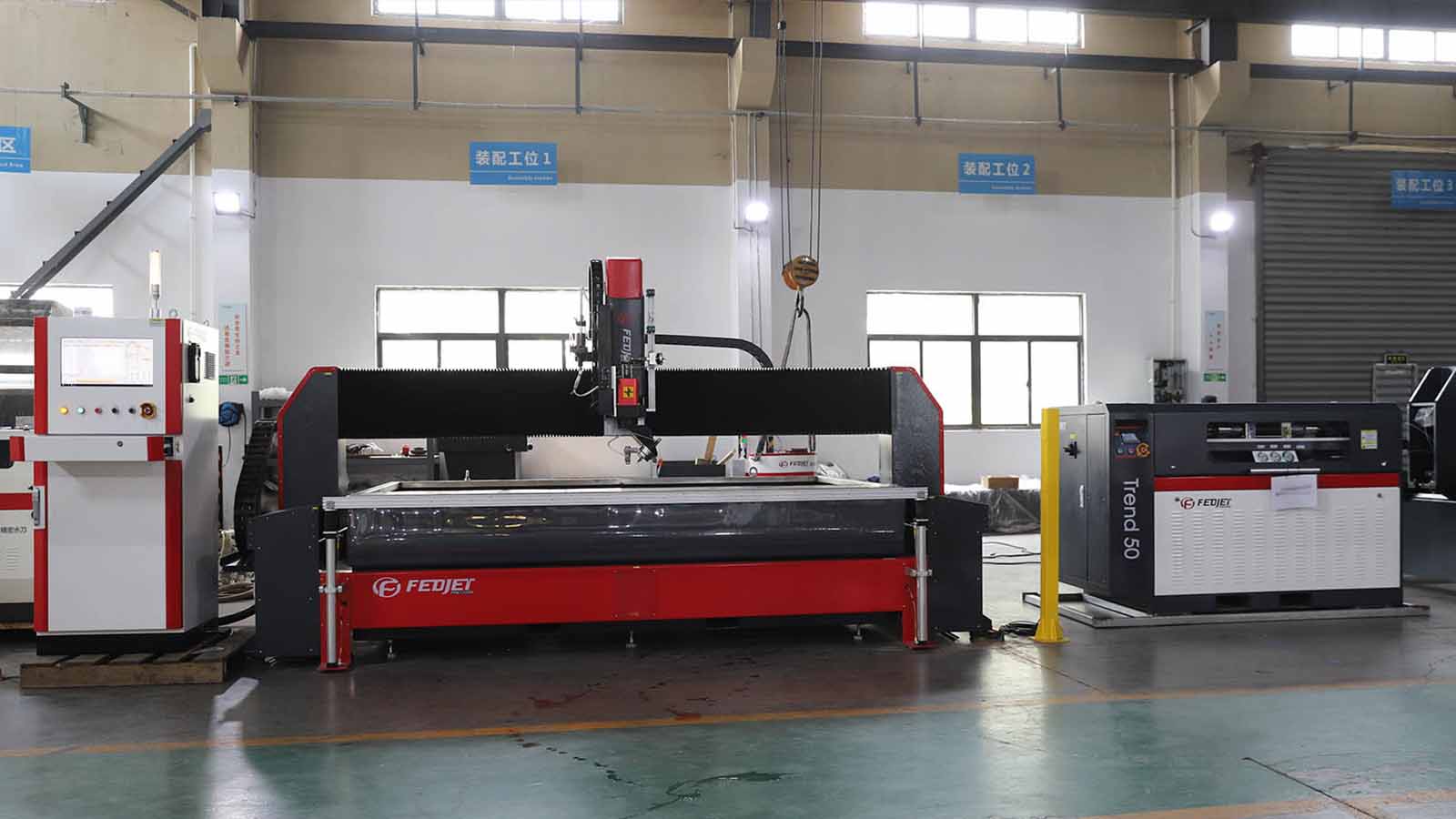
The water jet cutter market has never been more fragmented. Online searches surface dozens of manufacturers, equipment brokers, and dealers—each claiming to offer the best industrial water jet cutting machine for sale. Prices span from $20,000 to $300,000+, and technical specifications read like alphabet soup: MPa, PSI, axis configurations, intensifier versus direct drive. Without industry context, the purchasing decision becomes overwhelming.
This guide cuts through the noise. Based on two decades of equipment sourcing experience across aerospace, automotive, and precision manufacturing sectors, we'll walk through exactly what matters when you buy a water jet cutter, what pricing actually looks like in today's market, and how to separate marketing claims from genuine capability.
Whether you're looking for a CNC water jet cutting machine for a new operation, evaluating a used water jet cutter for sale, or trying to understand why Chinese industrial water jet cutter price quotes are significantly lower than Western alternatives—this article delivers the answers procurement decision-makers need.
Before diving into specific machines or manufacturers, establish your technical baseline. These seven factors determine whether a water jet cutting machine for sale actually meets your production requirements.
Pump pressure directly governs cutting capability. The water jet industry operates across three pressure tiers:
- Standard production: 60,000–87,000 PSI (413–600 MPa)
- High-performance: 87,000–100,000 PSI (600–690 MPa)
- Ultra-high pressure: 100,000+ PSI (690 MPa+) for specialty applications
Intensifier pumps dominate the market because they maintain consistent pressure throughout the cutting cycle. Direct drive pumps offer lower maintenance requirements but typically limit you to 55,000 PSI maximum—adequate for softer materials but insufficient for aerospace-grade titanium or hardened composites.
The American Waterjet Association (AWA) technical standards specify minimum 60,000 PSI for quality metal cutting. Any industrial water jet cutter price quote significantly below market average deserves scrutiny on pump specifications.
The number of cutting axes determines what you can and cannot cut:
| Configuration |
Capability |
Typical Price Range |
| 3-axis |
Basic 2D profiles, flat materials |
$25,000–$60,000 |
| 4-axis |
Tilting head for bevel cuts, stone profiling |
$45,000–$90,000 |
| 5-axis |
Complex 3D contours, aerospace components |
$80,000–$180,000 |
| 6-axis+ |
Robotic cells for automotive interiors, 3D part cutting |
$120,000–$300,000+ |
Most new buyers default to 3-axis. This works for flat stock cutting—metals, stone, composites. But if your operation involves beveled edges, tapered profiles, or complex 3D geometries, the upgrade to 5-axis pays for itself in reduced secondary machining.
Cutting area constrains your maximum part size. Standard table configurations include:
- Compact: 1,300mm × 1,300mm to 2,000mm × 3,000mm—suitable for job shops and prototyping
- Standard production: 3,000mm × 1,500mm to 4,000mm × 2,000mm—the sweet spot for most manufacturing
- Large format: 6,000mm × 3,000mm and above—automotive stamping dies, aerospace panels, stone yards
The mistake many buyers make: ordering "the biggest table available." Larger tables increase machine cost, floor space requirements, and energy consumption. A 2,000mm × 4,000mm machine costs 40–60% more than a 1,500mm × 3,000mm equivalent. If your largest current part fits on the smaller table, resist the temptation to overbuy.
Precision specifications tell you what tolerance you'll hold:
- Entry-level systems: ±0.1mm positioning accuracy
- Standard industrial: ±0.05mm positioning accuracy
- High-precision aerospace/medical: ±0.02mm positioning accuracy
ASTM E2918-19 (Standard Test Method for Determining Precision of Abrasive Waterjet Operations) provides the testing methodology for verifying these specifications. Request the manufacturer's test data sheet, not just the spec sheet.
Repeatability—how consistently the machine returns to the same point—matters more than raw accuracy for high-volume production. A machine that holds ±0.03mm consistently outperforms one that claims ±0.02mm but varies by ±0.08mm between cycles.
Modern CNC water jet cutting machines run on established industrial controllers: FANUC, Siemens SINUMERIK, and proprietary systems. The critical question: does the controller integrate with your CAD/CAM workflow?
ESA (European waterjet manufacturers) technical documentation emphasizes that controller-software compatibility impacts setup time more than cutting speed. A machine that imports your DXF or STEP files directly eliminates a translation step that adds 15–30 minutes per job on systems requiring manual nest programming.
This factor separates professional equipment from hobbyist-grade machines. A complete closed-loop system includes:
- Input water filtration (5-micron minimum)
- Pressurized cutting water supply
- Abrasive removal and separation
- Water recirculation
Without proper recovery systems, a production water jet cutter consumes 2–3 gallons of water per minute—roughly 500–800 gallons per 8-hour shift. Municipal water costs plus wastewater disposal make open-loop systems expensive to operate. Budget $15,000–$30,000 for a quality closed-loop system if not included with the machine.
Technical support often determines whether a water jet cutting machine for sale becomes a profit center or an expensive conversation piece. Evaluate:
- Local service technician availability (response time under 24 hours preferred)
- Spare parts inventory and lead times
- Remote diagnostic capabilities
- Operator training provisions
- Warranty terms (minimum 12 months standard; 24 months indicates manufacturer confidence)
International buyers sourcing from Chinese manufacturers should confirm whether the supplier maintains parts inventory outside China or ships from the factory (typically 2–4 week lead times for international shipments).
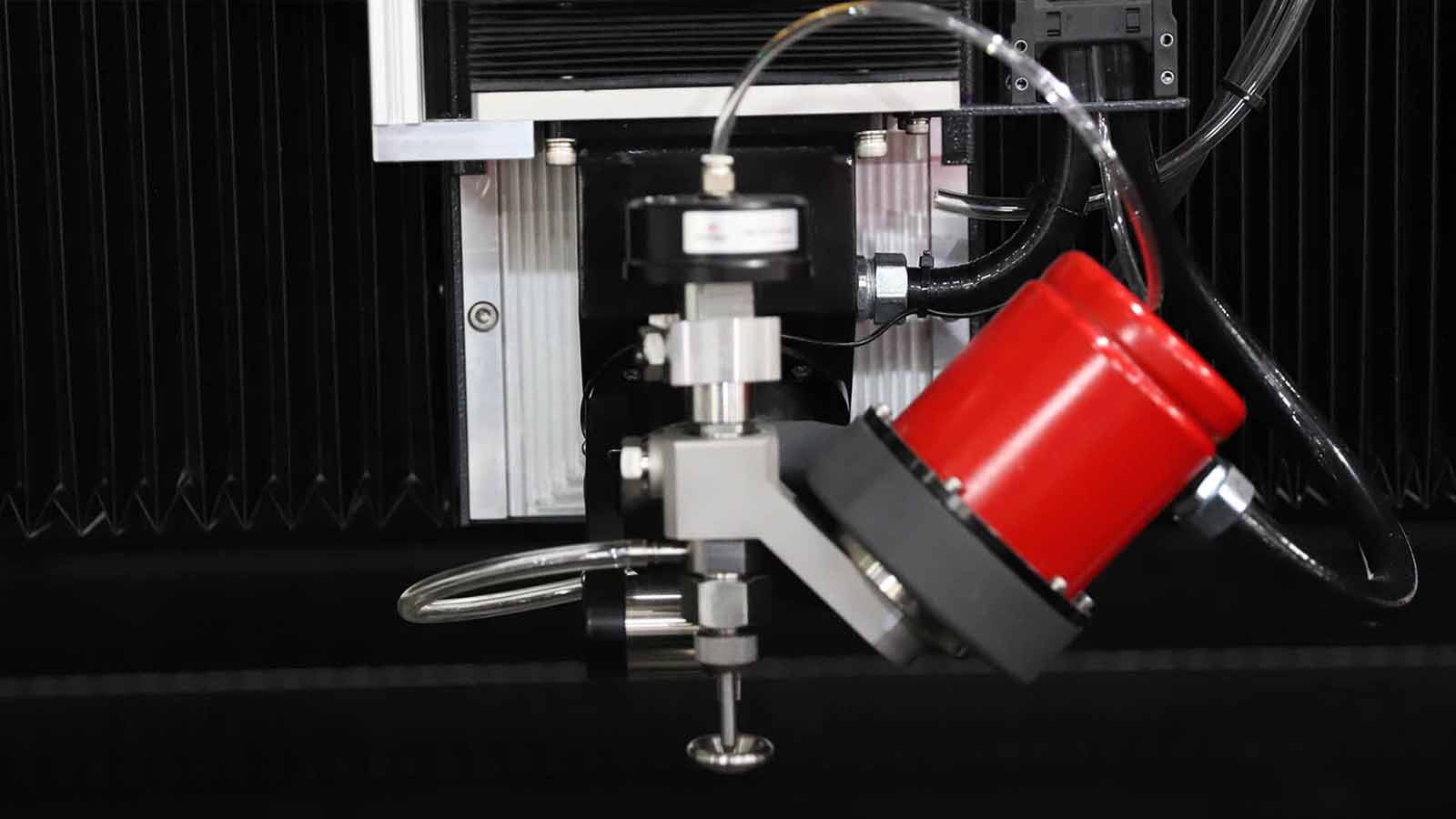
Understanding the equipment landscape helps narrow your search. The water jet cutting equipment market breaks into distinct categories, each optimized for specific use cases.
The most common industrial configuration. The cutting head moves along a stationary gantry while the material stays fixed on the cutting table.
Best for: High-volume 2D cutting, nesting operations, repetitive production runs
Strengths: Excellent rigidity, large cutting areas, proven reliability
Limitations: Fixed material positioning, slower setup for single-piece runs
Standard gantry configurations range from 1,500mm × 3,000mm to 4,000mm × 12,000mm cutting areas. Dardi International pioneered this configuration in China, with their DWJ Series establishing benchmarks for Chinese manufacturing quality since 1996.
The cutting head assembly traverses the material while the bridge itself moves perpendicular to the cut direction.
Best for: Wide-format cutting, sheet materials where full table access isn't needed
Strengths: Compact footprint, excellent for long cross-sections
Limitations: Bridge weight limits acceleration; not ideal for complex nesting with many direction changes
No bridge—only the cutting head traverses on overhead rails. This eliminates the bridge obstruction and provides full front-to-back access.
Best for: Facilities requiring continuous sheet feeding, automated loading/unloading integration
Strengths: Maximum accessibility, easy material handling
Limitations: Cantilever deflection at maximum extension; typically limited to 2,000–3,000mm width
Small-format machines (typically under 1,000mm × 1,000mm cutting area) designed for precision work, prototyping, or shops with space constraints.
Best for: Electronics manufacturing, jewelry, medical device prototyping, educational institutions
Strengths: Lower entry cost ($15,000–$35,000), minimal floor space, quick job changeover
Limitations: Not suitable for production volumes; limited material capacity
Advanced configurations enabling true 3D cutting without repositioning the workpiece.
Best for: Aerospace component manufacturing, complex turbine blade repair, automotive tooling
Strengths: Eliminates multiple setups, maintains accuracy across 3D contours
Limitations: Significantly higher cost, requires skilled programming, longer cycle times
The AWA's 2023 Industry Report documents that 5-axis systems now represent 18% of new industrial water jet cutter sales globally—a 7% increase from 2019—driven by aerospace manufacturing growth and automotive lightweighting requirements.
For on-site cutting where transporting material isn't feasible.
Best for: Shipyard repair, offshore oil platform maintenance, construction demolition
Strengths: Deploys in the field, no material transport required
Limitations: Performance constraints compared to fixed installations; typically 3-axis only
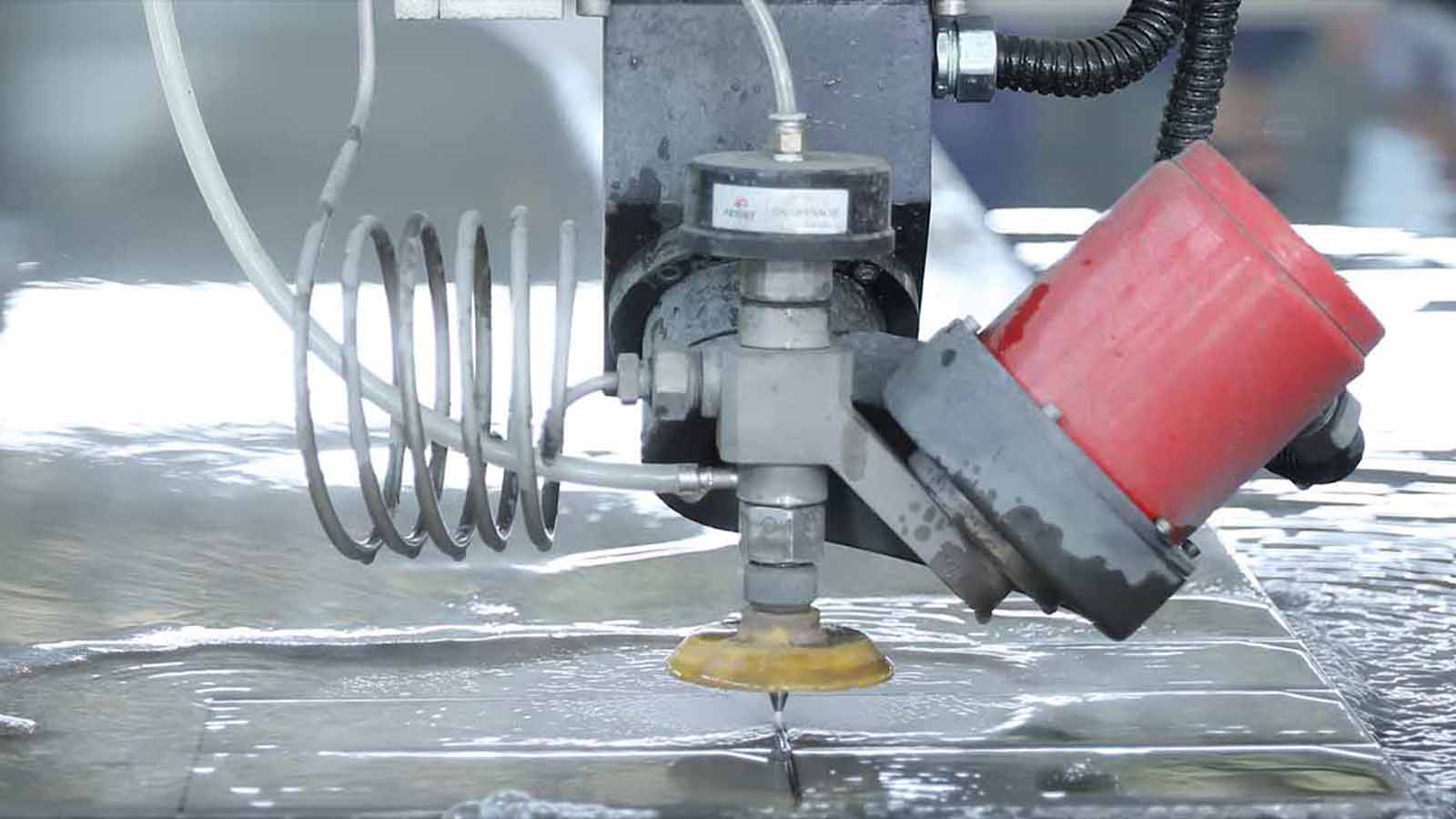
The used water jet cutter market has expanded significantly as first-generation Chinese machines reach 10–15 years of service age. Here's how to evaluate the trade-offs.
- Full warranty coverage: Typically 12–24 months on mechanical and electrical components
- Latest technology: Current-generation controllers, improved pump efficiency, better software integration
- Documented maintenance history: Starting from zero allows you to build a maintenance schedule from known conditions
- Customization options: Specify exactly what you need—table size, pump pressure, software package
- Training included: Reputable manufacturers provide comprehensive operator training
Typical lead time: 6–12 weeks from order to installation, depending on manufacturer and configuration complexity.
- 30–50% lower initial investment: A 5-year-old machine in good condition costs significantly less than current models
- Immediate availability: No waiting for manufacturing lead times
- Depreciated value: The steepest depreciation curve already passed—your resale value holds better percentage-wise
If you're evaluating a used water jet cutter for sale, these areas require thorough assessment:
Pump hours: Ask for the hour meter reading. Pumps typically require major rebuilds at 5,000–8,000 operating hours. At typical production usage (2,000–3,000 hours/year), a 10,000-hour pump may need immediate attention.
Intensifier cylinder wear: The intensifier cylinder determines rebuild costs. Eddy current testing or pressure decay testing reveals wear without disassembly.
Linear guide condition: Visual inspection for wear patterns, scoring, and lubrication condition. Worn guides introduce positioning errors that are expensive to correct.
Cutting head integrity: The mixing tube and orifice holder see the most wear. Replaceable components, but their condition indicates overall machine care.
Control system obsolescence: Older Fanuc 0-series or early Siemens systems may lack modern connectivity. Factor upgrade costs ($5,000–$15,000) into your evaluation.
Water filtration system: The closed-loop system often shows neglect first. Check filters, pumps, and tanks for corrosion and sediment buildup.
The International Association of Machinery Dealers (IAMD) estimates that 23% of used industrial water jet equipment on the secondary market requires $10,000–$40,000 in rehabilitation within the first year of ownership. Factor this into your budget negotiations.
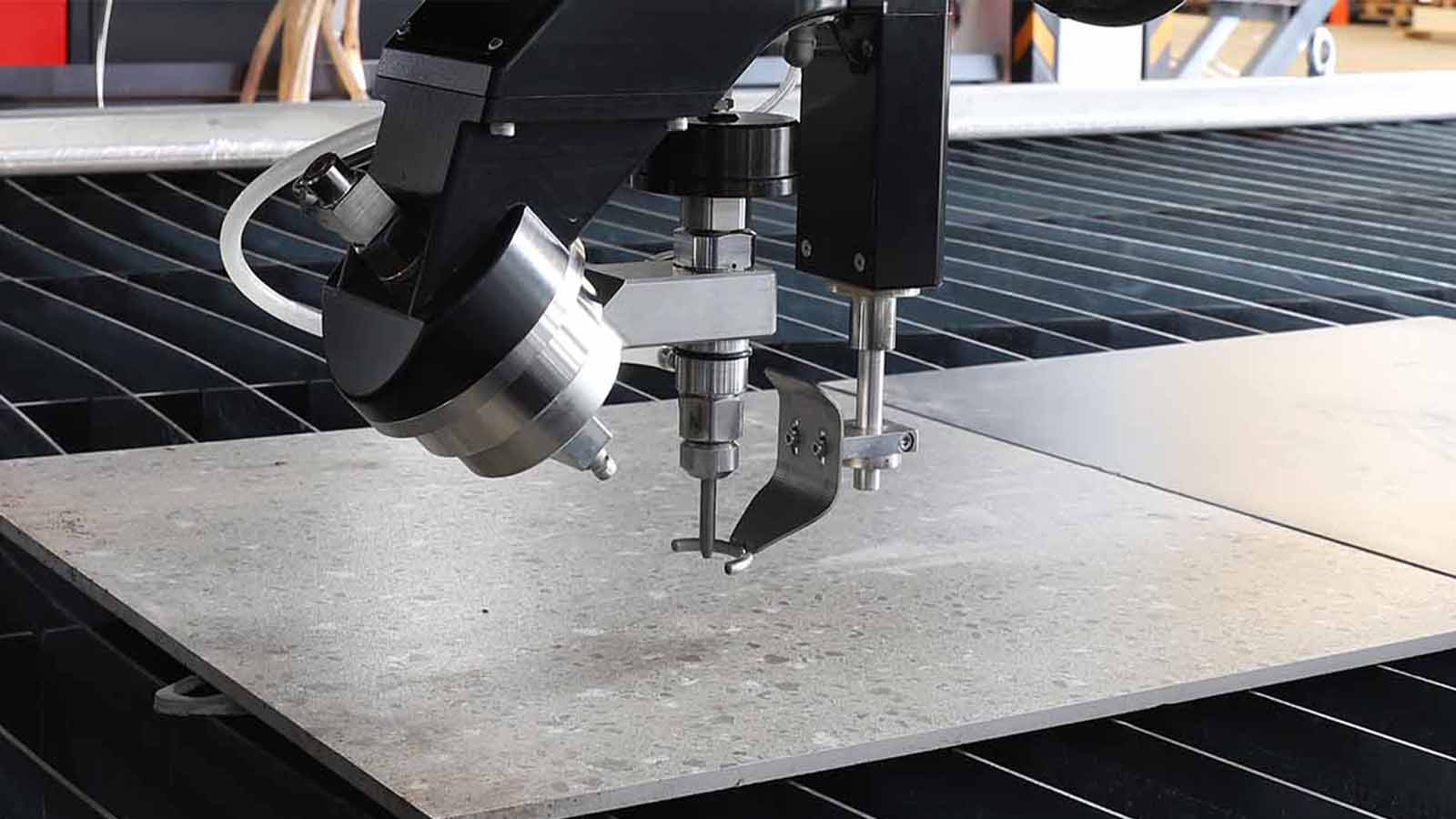
Industrial water jet cutter price varies dramatically based on configuration, manufacturer, and origin. Here's a realistic market overview as of 2024.
| Configuration |
Chinese Manufacturers |
Korean Manufacturers |
European Manufacturers |
American Manufacturers |
| 3-axis compact (1.5m×3m) |
$25,000–$40,000 |
$45,000–$65,000 |
$70,000–$100,000 |
$90,000–$130,000 |
| 3-axis standard (2m×4m) |
$35,000–$55,000 |
$60,000–$85,000 |
$95,000–$140,000 |
$120,000–$170,000 |
| 5-axis (2m×4m) |
$70,000–$120,000 |
$110,000–$160,000 |
$160,000–$250,000 |
$200,000–$350,000 |
| Large format 5m×12m+ |
$90,000–$180,000 |
N/A |
$250,000–$500,000 |
$300,000–$600,000 |
Pump pressure: Each 10,000 PSI increment in maximum pressure adds approximately 8–12% to the pump cost. A 100,000 PSI intensifier pump costs roughly 40% more than a 60,000 PSI equivalent.
Table size: Doubling the cutting area increases machine cost by 40–60%, not 100%. Larger tables require proportionally stiffer structures but share many component costs.
Automation level: Auto-loader and unloader systems add $20,000–$80,000. Automatic nozzle changers ($8,000–$25,000) matter for production environments.
Software licensing: Some manufacturers charge annual licenses for CAD/CAM modules ($2,000–$8,000/year). Others include software in the purchase price.
Installation and training: On-site installation typically runs $3,000–$10,000 depending on distance and machine complexity. Factor this if not included.
Shipping and customs: For international purchases, expect $5,000–$25,000 for freight, insurance, and import duties depending on machine size and destination country. Water jet machines fall under HS code 8456.50.
Electrical requirements: Most industrial water jet cutters require 480V/3-phase power. Facility upgrades add $10,000–$50,000 if you don't already have the service.
Foundation requirements: Heavy machines (5,000–15,000 lbs) may require reinforced flooring or vibration isolation. Budget $5,000–$30,000 for foundation work.
Abrasive supply: Quality garnet runs $300–$600 per ton. A production machine consumes 0.5–2 tons monthly depending on workload. This is a recurring expense that affects your per-part cost calculation.
Consumables maintenance: Orifices ($15–$50 each, 50–100 hour life), mixing tubes ($50–$200 each, 80–200 hour life), high-pressure seals ($200–$800 per kit, 500–2,000 hour life). Budget $0.50–$2.00 per hour of operation for consumables.
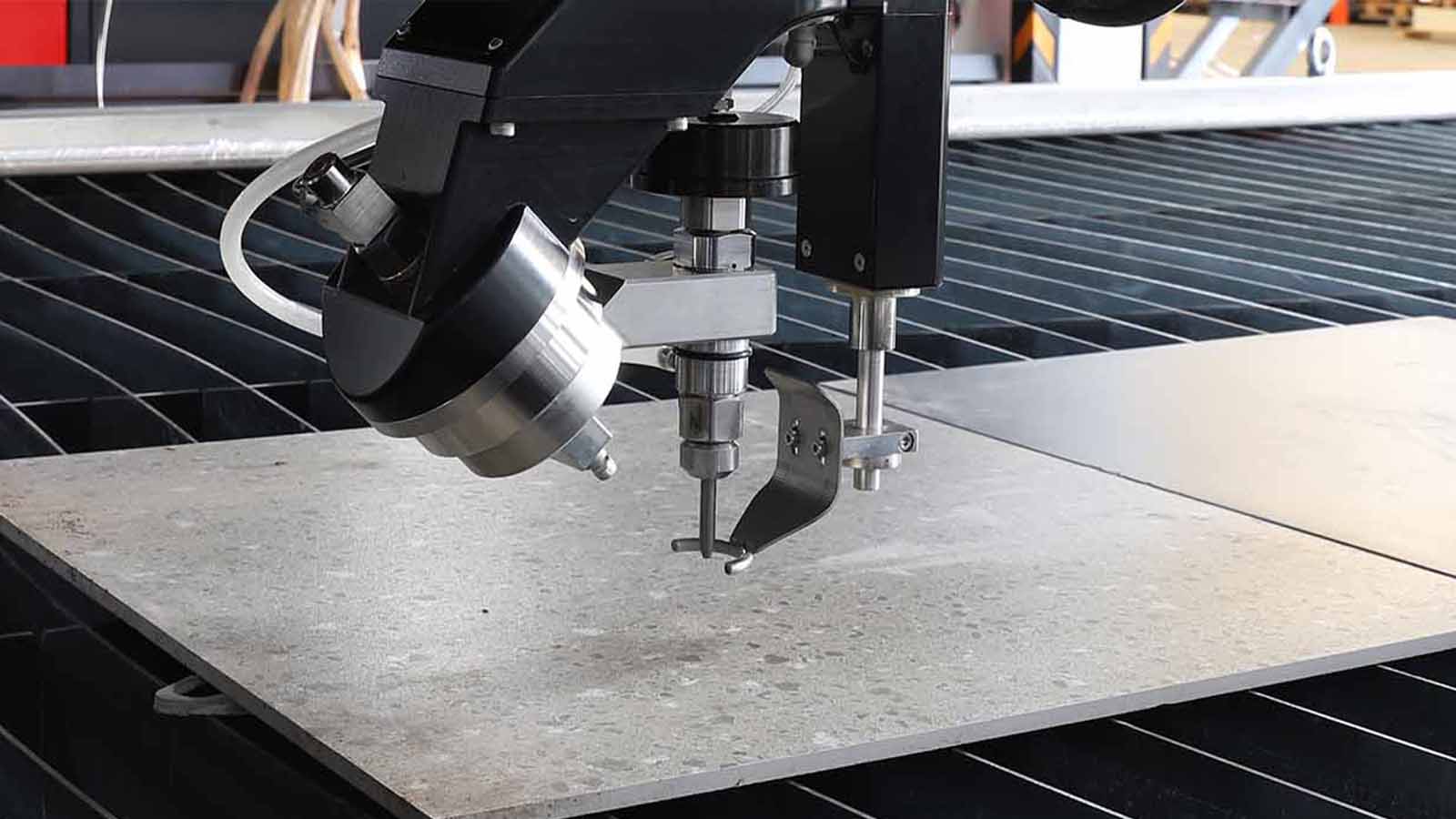
A water jet cutter for sale is only as reliable as the company behind it. Due diligence separates durable partnerships from problematic purchases.
Years in business: Waterjet technology requires sustained R&D investment. Manufacturers with fewer than 10 years of operation haven't survived a full equipment lifecycle. Dardi International's 30-year track record demonstrates the kind of longevity worth considering.
Installed base: A manufacturer with 5,000+ global installations has worked through the engineering problems that inevitably surface in first-generation designs. Small installed bases mean you're beta testing.
Certification portfolio: ISO 9001 (quality management) is baseline. AS9100 (aerospace) and ISO 14001 (environmental) indicate higher operational standards. Third-party certifications can't be faked.
Manufacturing facility: If possible, tour the factory. Look for dedicated assembly bays, quality control stations, and machine testing procedures. Video calls work if on-site visits aren't feasible.
R&D investment: Ask about patent count, engineering staff levels, and recent product developments. Manufacturers coasting on old designs lack the capability to solve novel problems.
Component sourcing: Quality manufacturers specify brand-name components: Siemens or Fanuc controllers, Bosch Rexroth linear guides, Schneider Electric switchgear. Generic "OEM components" often signal cost-cutting elsewhere.
Response time commitments: Get written service level agreements. The "2-hour response, 24-hour到场" commitment from manufacturers like FEDJETTECH represents the standard buyers should expect from quality Chinese suppliers.
Remote diagnostic capability: Modern equipment with internet connectivity allows manufacturers to troubleshoot without travel. Older machines require on-site visits for every issue.
Spare parts availability: Request the top-20 spare parts list with pricing before purchasing. Unavailable parts create operational paralysis.
Reference customers: Ask for three reference customers in your industry. Direct conversations reveal operational realities that sales materials won't share.
The global waterjet market has shifted dramatically toward Chinese manufacturing over the past decade. Understanding the structural advantages explains why procurement managers increasingly look East.
Chinese manufacturers benefit from lower labor costs, domestic supply chains for 80–90% of components, and government support for advanced manufacturing. The result: comparable specification equipment at 40–60% lower price points compared to Western manufacturers.
The waterjet intensifier pump—the heart of the system—illustrates this. A Chinese-manufactured 100,000 PSI intensifier pump costs approximately $15,000–$25,000 in the current market, while equivalent Western pumps run $35,000–$60,000. For a complete machine, this translates to $40,000–$120,000 in savings depending on configuration.
Chinese waterjet manufacturers have closed the quality gap significantly since the first domestic machine rolled off the line in 1996. The 2023 Chinese customs data shows China now accounts for over 35% of global waterjet machine exports by volume. Chinese manufacturers now hold over 1,200 waterjet-related patents globally.
Leading Chinese manufacturers achieve:
- Positioning accuracy matching Western competitors (±0.05mm standard)
- Pump pressures up to 100,000 PSI (690 MPa)
- 5-axis and robotic integration capabilities
- ISO 9001, CE, and UL certifications for international markets
Post-2020 supply chain disruptions exposed dependencies on single-source Western suppliers. Chinese manufacturers with domestic component supply chains demonstrated resilience during periods when Western supply chains experienced 6–12 month delays.
For buyers in North America and Europe:
- Water jet machines fall under HS code 8456.50
- US import duty: 4.2% for complete machines
- EU import duty: 2.7% for water jet cutting machines
- Most manufacturers offer FOB, CIF, and DDP pricing terms
The combination of lower base prices, manageable import duties, and shorter lead times (compared to Western equipment) makes Chinese sourcing increasingly attractive for mid-market applications.
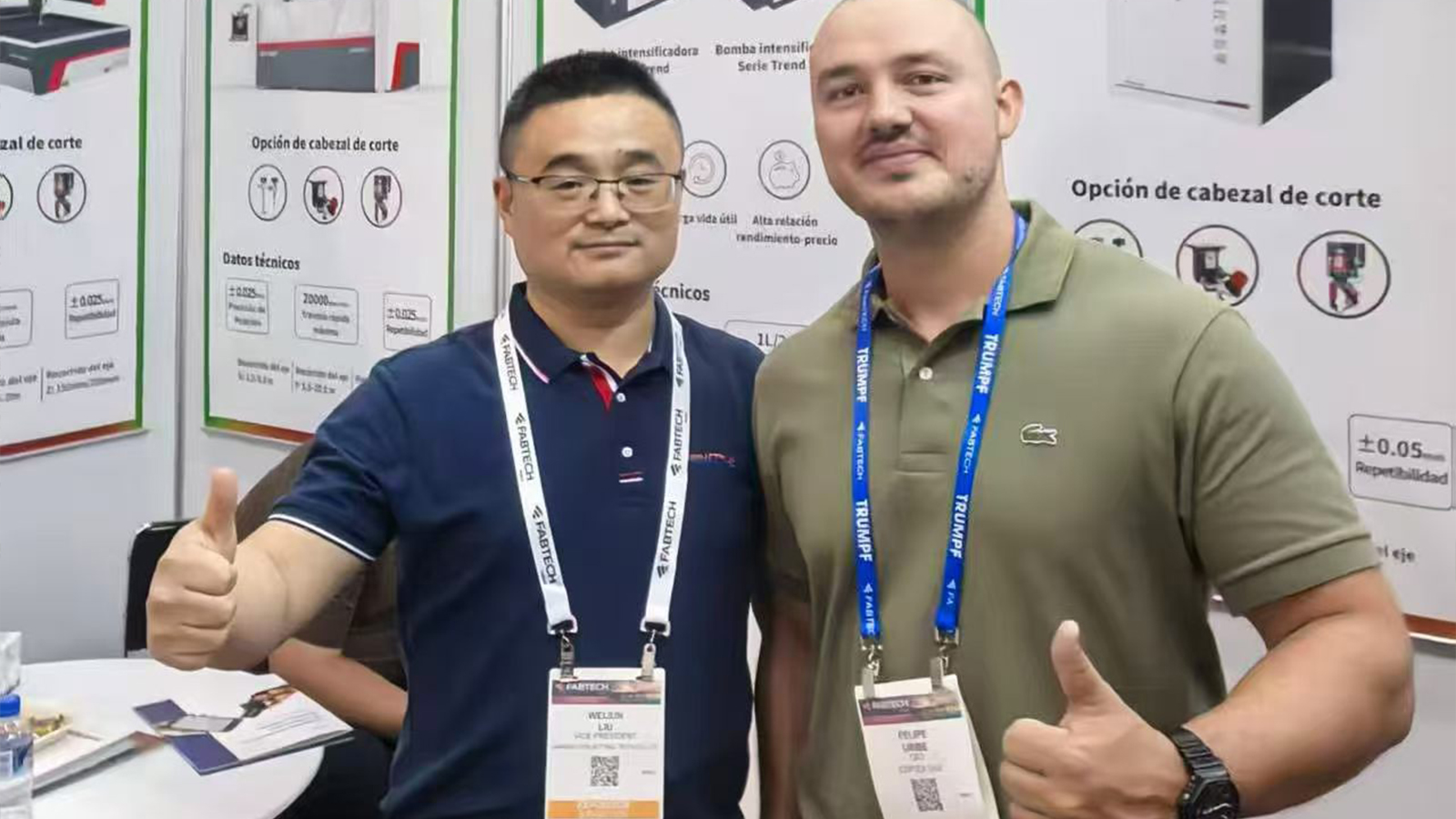
FEDJET (
www.fedjetwaterjet.com) positions itself at the intersection of Chinese manufacturing capability and international service standards. Based in Nanjing's Jiangning Industrial Concentration Zone, the company specializes in automated water shell removal systems and precision waterjet cutting equipment serving aerospace, automotive, precision casting, and general manufacturing sectors.
FEDJET manufactures:
- 3-axis CNC waterjet cutting machines: Standard gantry configurations from 1,500mm × 2,000mm to 4,000mm × 6,000mm cutting areas
- 5-axis waterjet systems: Dynamic cutting for beveled edges and complex profiles
- Gantry-style waterjet machines: Heavy-duty configurations for automotive and industrial applications
- Automated shell removal systems: Replacing vibration deburring and manual knockout operations in precision casting facilities
- Closed-loop water recycling systems: Full environmental compliance with water recovery rates exceeding 95%
Standard FEDJET configurations include:
- Pump pressures: 60,000–100,000 PSI (413–690 MPa)
- Positioning accuracy: ±0.05mm
- Repeatability: ±0.02mm
- Control systems: FANUC or Siemens SINUMERIK options
- Cutting head configurations: Standard and dynamic (tilting) options
For international buyers, FEDJET emphasizes responsive support:
- 2-hour initial response time guarantee
- 24-hour on-site service commitment for critical issues
- Remote diagnostic support via internet connectivity
- 12-month warranty with optional 24-month extended coverage
- Operator training included with equipment purchase
- Spare parts shipping within 48 hours for standard items
FEDJET waterjet equipment serves:
- Aerospace: Composite trimming, titanium cutting, precision panel processing
- Automotive precision casting: Automated shell removal replacing manual knockout
- Stone and architectural glass: Large-format cutting with bevel capabilities
- Metal fabrication: Production cutting for industrial equipment manufacturing
- Ceramic and glass: Non-thermal cutting preserving material properties
The company's focus on automated shell removal systems addresses a specific pain point in precision investment casting: the labor-intensive, inconsistent process of removing ceramic shells from cast parts. Their closed-loop water recycling systems further differentiate their offering for environmentally conscious buyers.
Buyers interested in evaluating FEDJET water jet cutter for sale options can request quotes through their website (
www.fedjetwaterjet.com or
www.fedjetting.com) or contact their sales team directly at info@fedjettech.com.
The search for industrial water jet cutting equipment doesn't have to feel like navigating without a map. The framework outlined in this guide—defining technical requirements, understanding configuration trade-offs, evaluating pricing honestly, and qualifying manufacturers rigorously—provides a structured path to confident purchasing decisions.
A few final recommendations based on procurement patterns we've observed:
Define your non-negotiables first. List the three specifications that absolutely must meet your requirements. Everything else becomes flexible. This prevents decision fatigue on minor features.
Get three competitive quotes minimum. Quotes should be on equivalent specifications—same pump pressure, same table size, same controller. Apples-to-apples comparisons reveal true value.
Plan for operational costs from day one. The machine purchase price typically represents 40–50% of total cost over a 10-year lifecycle. Consumables, maintenance, energy, and operator costs compound quickly.
Don't sacrifice service for price savings. A $5,000 price discount means nothing if the machine sits idle for three weeks waiting for a technician. Response time guarantees matter more than initial price.
Start conservative, upgrade strategically. A well-specified 3-axis machine often outperforms an under-specified 5-axis machine. Get the basics right first—additional capability can be added or a second machine purchased as your operation scales.
The waterjet industry offers more genuine options today than ever before. Chinese manufacturers like FEDJETTECH have matured into credible alternatives to traditional Western suppliers, offering competitive specifications, responsive service, and pricing structures that make precision waterjet cutting accessible to operations of all sizes.
Your next step: contact two or three manufacturers from your evaluation shortlist. Request detailed quotations with full technical specifications, confirm service commitments in writing, and ask for reference customers in your industry. Real conversations reveal what specifications and marketing materials can't.
Document References:
- American Waterjet Association (AWA). "Technical Standards for Waterjet Operations." AWA Technical Reference 2023.
- ASTM International. "ASTM E2918-19: Standard Test Method for Determining Precision of Abrasive Waterjet Operations."
- Chinese Customs Statistics. "Export Data for HS Code 8456.50 (Waterjet Cutting Machines)." 2023.
- International Association of Machinery Dealers (IAMD). "Secondary Market Equipment Evaluation Guidelines." 2022.
- European waterjet manufacturers Association (ESA). "Technical Documentation: Controller Integration Standards." 2023.


